12-Mo / 12K-Mi WarrantyA+ BBB RatedFree ShuttleAll Makes & ModelsFamily Owned Since 19814.8 Stars · 228 Reviews
0+
Years in Tucson
0.0
Google Rating
0
Verified Reviews
A+
BBB Rating
Maintenance
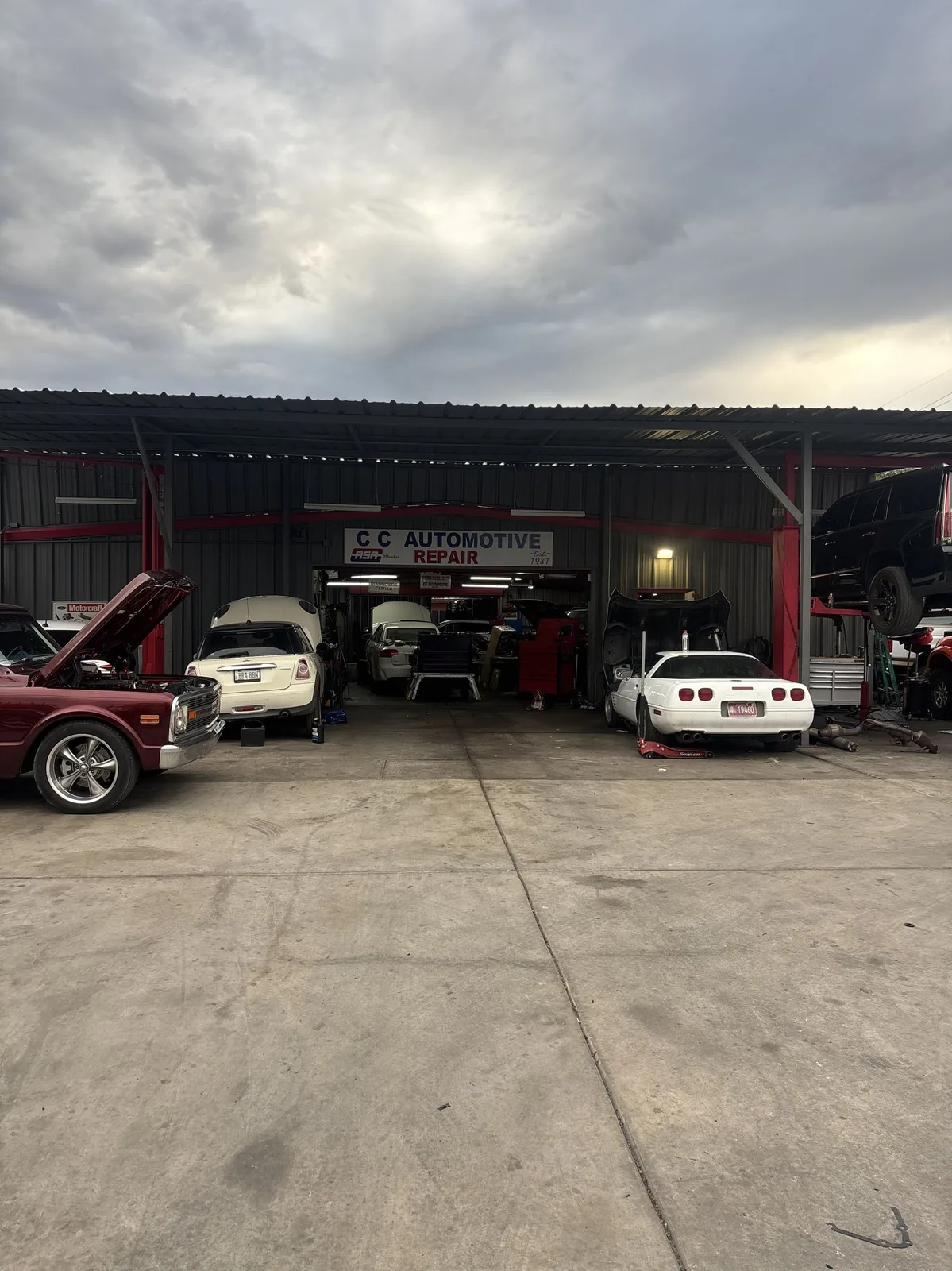
I'm Tony. My dad, Charlie, was a mechanic his whole life, I'm a certified mechanic, and my son is a mechanic too. C.C. Automotive has been a family shop in Tucson for 45 years, and we look at engines every day. We don't just change oil.
So when someone asks how often to change their oil, I don't just read off a sticker. Here's what the oil change shops and the manufacturers say, and why we tell our customers to come in sooner.
Tucson Driving
Why "normal driving" rarely describes Tucson
01
Summer heat
Triple-digit afternoons and long summers push engine oil hotter, and heat is what breaks oil down.
02
Stop-and-go traffic
Long idles and slow traffic are classic severe-driving conditions.
03
Dust
Dusty roads and dirt lots are on the severe list, and Tucson has plenty of both.
04
Short trips, towing and off-road
Short hops that never fully warm up the engine, towing, hauling and off-road work often count as severe too.
Our Rule
How we handle oil changes at C.C. Automotive
01
Change it 500 miles early
Start from the shortest interval you were quoted, subtract 500 miles and come in then. Don't ride it to the last mile.
02
Use the oil your engine calls for
Conventional, semi-synthetic or full synthetic, matched to your owner's manual, not whatever is cheapest on the shelf.
03
Look at the oil, not just the sticker
Check the dipstick between visits. Dark, gritty oil or a low level means don't wait.
04
Let a mechanic look it over
While your car is on the lift, we check belts, hoses, brakes, tires, battery and fluids.
What the oil change shops say
These are the numbers we hear quoted most often at oil change shops: about 3,000 miles for conventional oil, about 5,000 miles for semi-synthetic, and up to about 8,000 miles for full synthetic.
Jiffy Lube's own guidance is more careful than a window sticker. It says the old every-three-months-or-3,000-miles rule no longer fits every vehicle, and that drivers in severe conditions, such as stop-and-go traffic or extreme heat or cold, may need more frequent changes than the manual's normal schedule.
What the manufacturers say
Manufacturers publish two schedules: one for normal driving and a shorter one for severe driving. A few 2019 examples: Toyota lists 10,000 miles for the RAV4 and cuts it to 5,000 under special operating conditions. Ford lists up to 10,000 for the Fusion and cuts it to 5,000 for dusty or sandy roads. Kia lists 3,000 miles for the Optima either way, and Chevrolet lists 7,500 for the Malibu and Equinox either way.
Those numbers are the best case. Your owner's manual spells out what counts as severe, and an industry technical bulletin has long estimated that only about one in five vehicles is driven under normal conditions.
Why we say sooner, not later
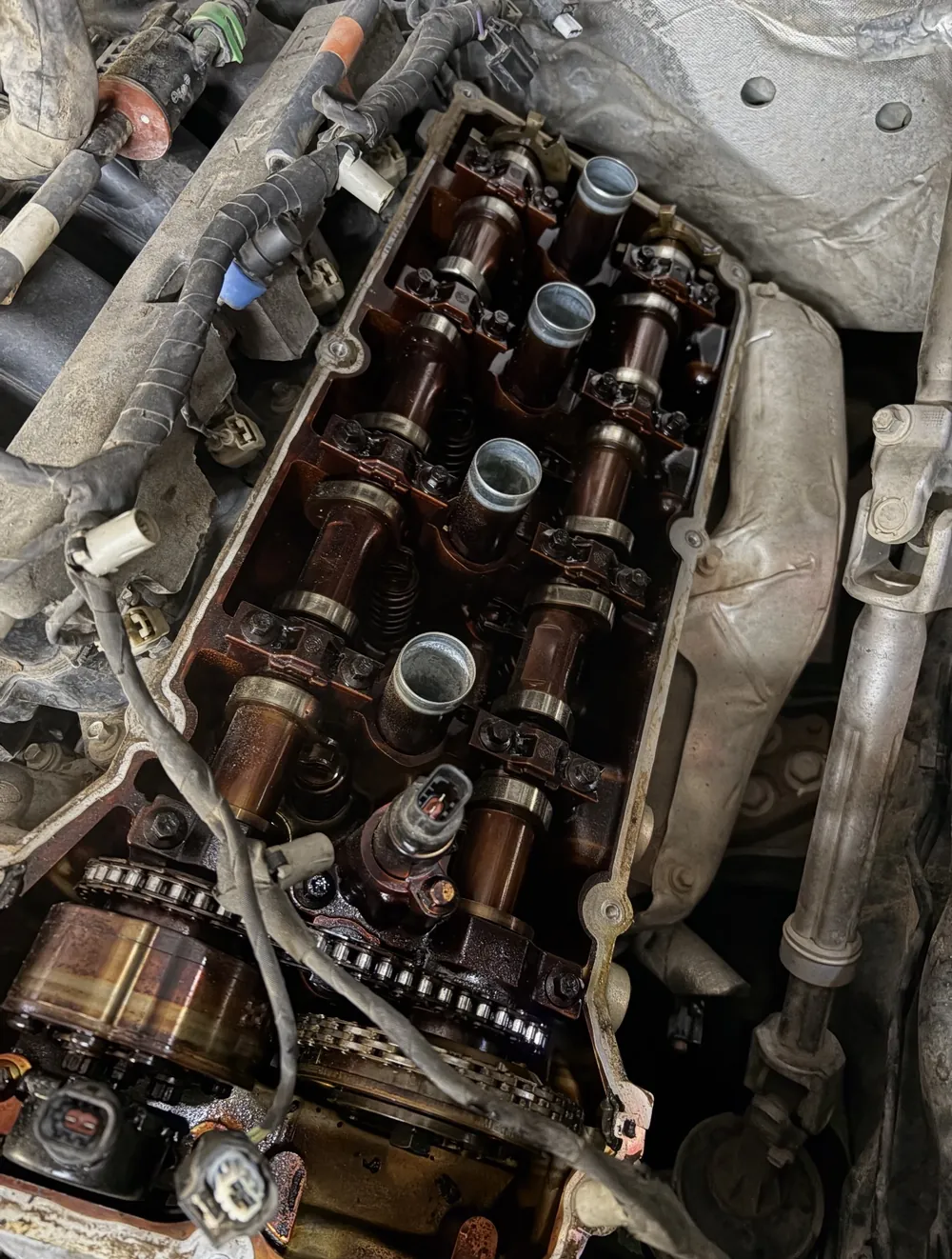
This is a real engine from our shop, and it's what one looks like when the oil is stretched past the interval. With the valve cover off, the camshafts and cylinder head are coated in dark, baked-on oil residue.
Real engine · C.C. Automotive · Tucson
I see this every day, and my advice is simple: don't wait for the last mile on any of those numbers. Oil doesn't just run out; its additives wear down, and old oil protects your engine less with every mile.
Our rule of thumb: whichever oil you choose, change it 500 miles before the number. Going by the shop numbers above, that's about 2,500 miles for conventional, 4,500 for semi-synthetic and 7,500 for full synthetic. For your own car, start from the shortest interval your owner's manual (its severe schedule) or your shop gives you, then subtract 500 miles, just to be safe.
An oil change costs a small fraction of an engine repair. Changing it a little early costs you an extra visit. Waiting too long is where the damage comes from.
Which oil should you use?
Use what your owner's manual calls for. Full synthetic holds up better to Tucson heat and is what most newer engines specify, while some engines are fine on a blend or conventional. Whichever you choose, the same rule applies: change it 500 miles before the number.
Right now we have $10 off oil changes: semi-synthetic $40, full synthetic $90. Drop your car off and our free shuttle will get you where you need to go.
Fastest way to book is a call. Online requests may take up to 24 hours.
Request Sent
Thanks — we'll be in touch soon. Need it faster? Call (520) 624-9250.
Common Questions
Oil change questions, answered straight.
Shops commonly quote about 3,000 miles for conventional oil, about 5,000 for semi-synthetic and up to about 8,000 for full synthetic. Tucson heat, dust and stop-and-go traffic count as severe driving, so our rule of thumb is to change it 500 miles before those numbers, whichever oil you choose. If your owner's manual severe schedule is shorter, start from that number and subtract 500 instead.
For many newer vehicles and oils, one rule for everyone no longer fits, and Jiffy Lube says as much. But the longer intervals assume normal driving, and Tucson heat and traffic often aren't normal. Your manual's severe schedule is the better guide.
Full synthetic holds up better to heat and is what most newer engines specify. Use what your owner's manual calls for. Even with full synthetic, the same rule applies: change it 500 miles before the number.
Changing it a little early won't hurt your engine; it just costs an extra visit. Waiting too long is where the damage comes from.
Treat it as a tool, not a promise. Jiffy Lube says it isn't designed to tell you exactly when to change oil, and suggests it may be time once the reading falls between 15% and 40%. We'd rather you didn't wait for zero.